

Housing Trust Programs
Affordable Homeownership
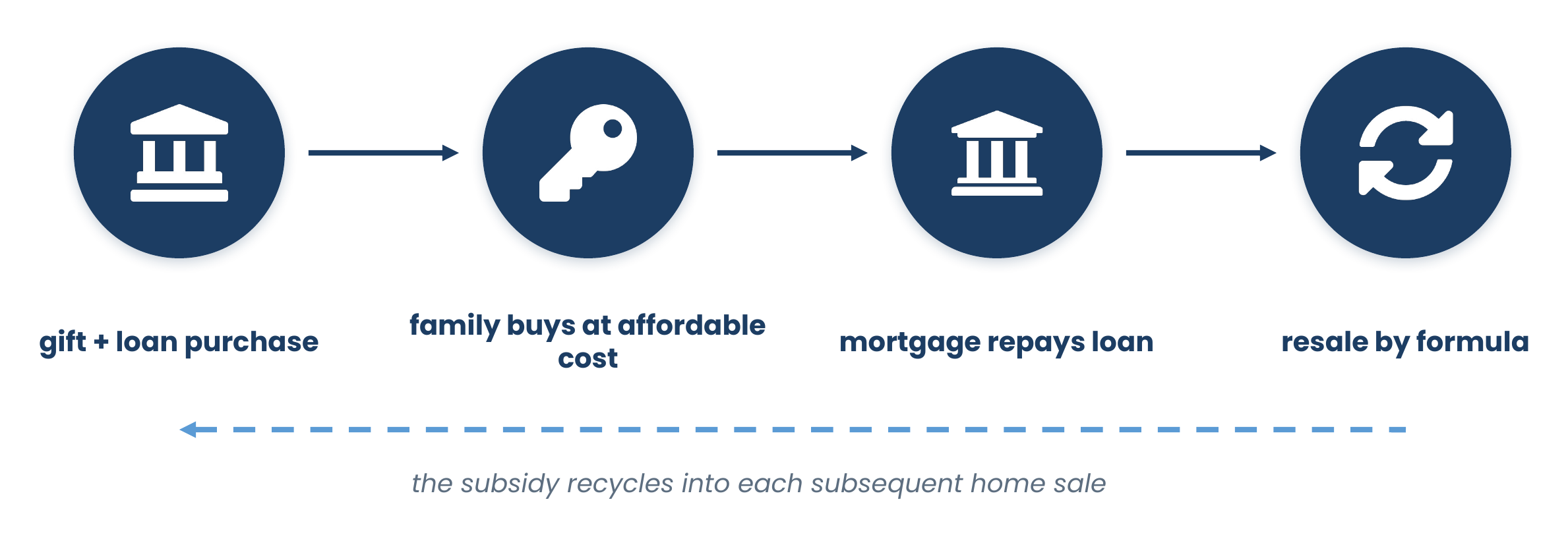
A donor gift – which may be accompanied by a short-term loan from a Community Development Financial Institution – allows the trust to buy an existing home. An income-qualified family then purchases at the covenant price — currently $360,000 to $405,000, with as little as 5% down. The family owns the home and builds real equity: their down payment, 2% growth each year, and every dollar of principal paid. At resale, the formula price carries the same affordability to the next qualified family.
OHT also welcomes homes as donations through bequests or other means.
Multi-Employer
Rental Partnership
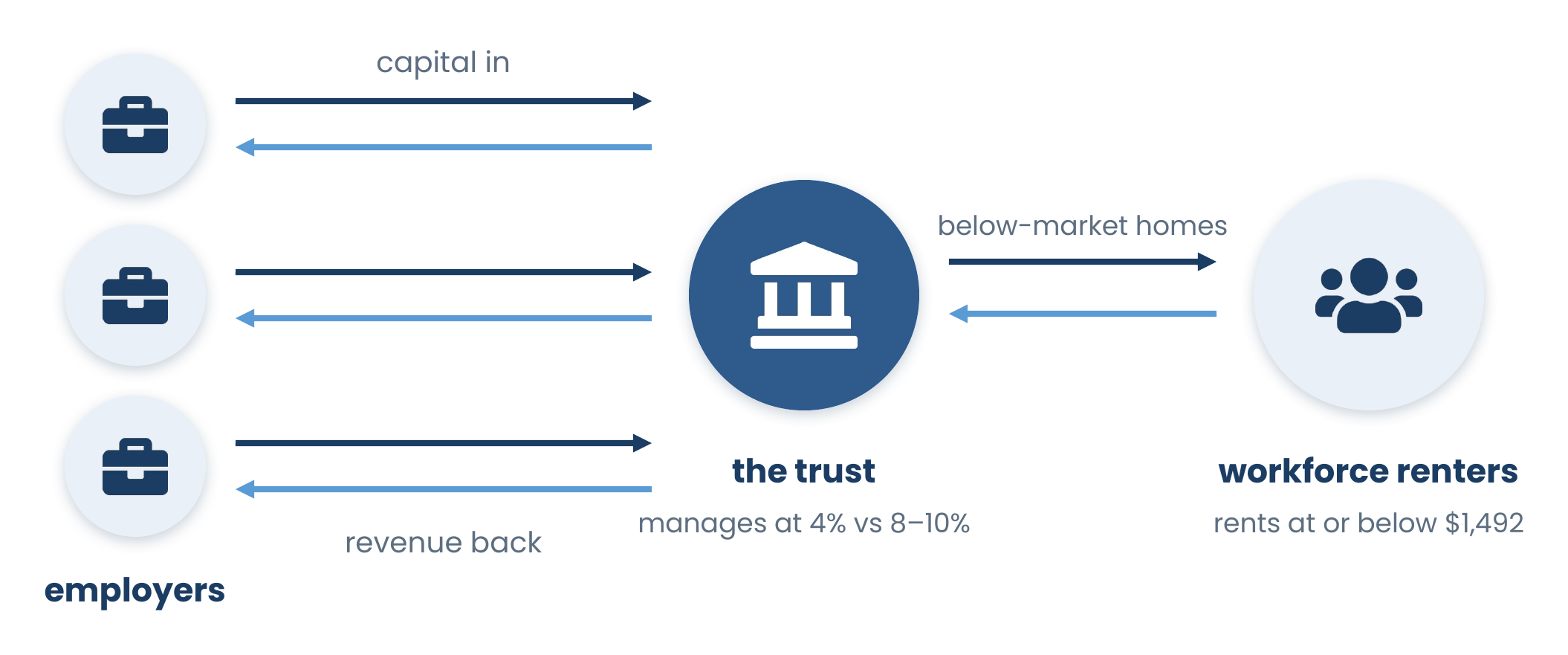
Two or more local employers co-fund the purchase of an occupied rental building near their workforce. The trust holds the land, qualifies renters, and manages the building at its 4% nonprofit rate. Rents are set at or below the low-income affordable threshold. No tenant is displaced, and employers may reserve units for income-qualified staff as vacancies arise.
Inclusionary Development Partnership
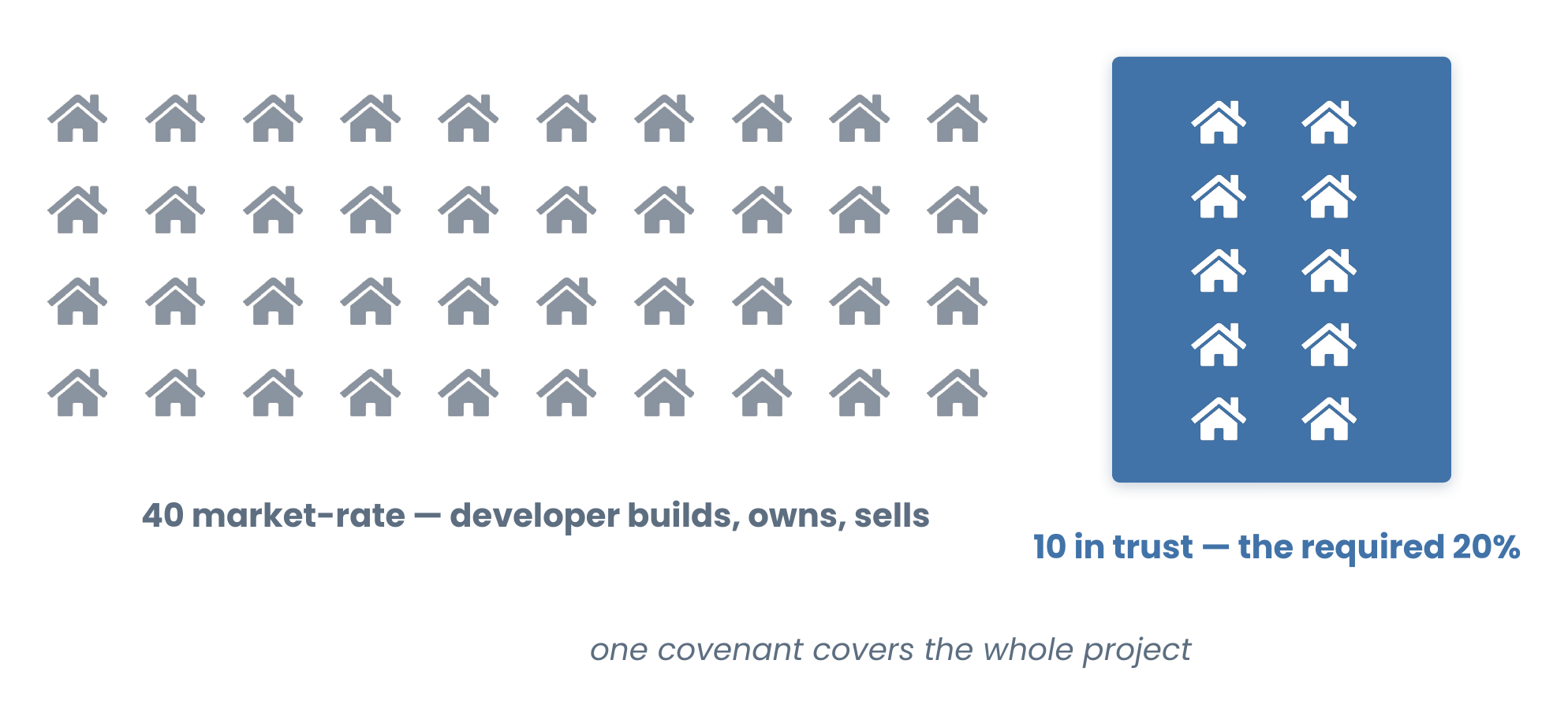
Cities and counties often require up to 20% of housing in a new project to be affordable. In this partnership, the land under those required homes transfers to the trust at project approval, and the developer builds every unit as planned. One covenant is recorded for the whole project, and the trust carries the ongoing work — income qualification, annual recertification, reporting, and management — for the life of the inclusionary homes.
Exempt Surplus Land Transfer
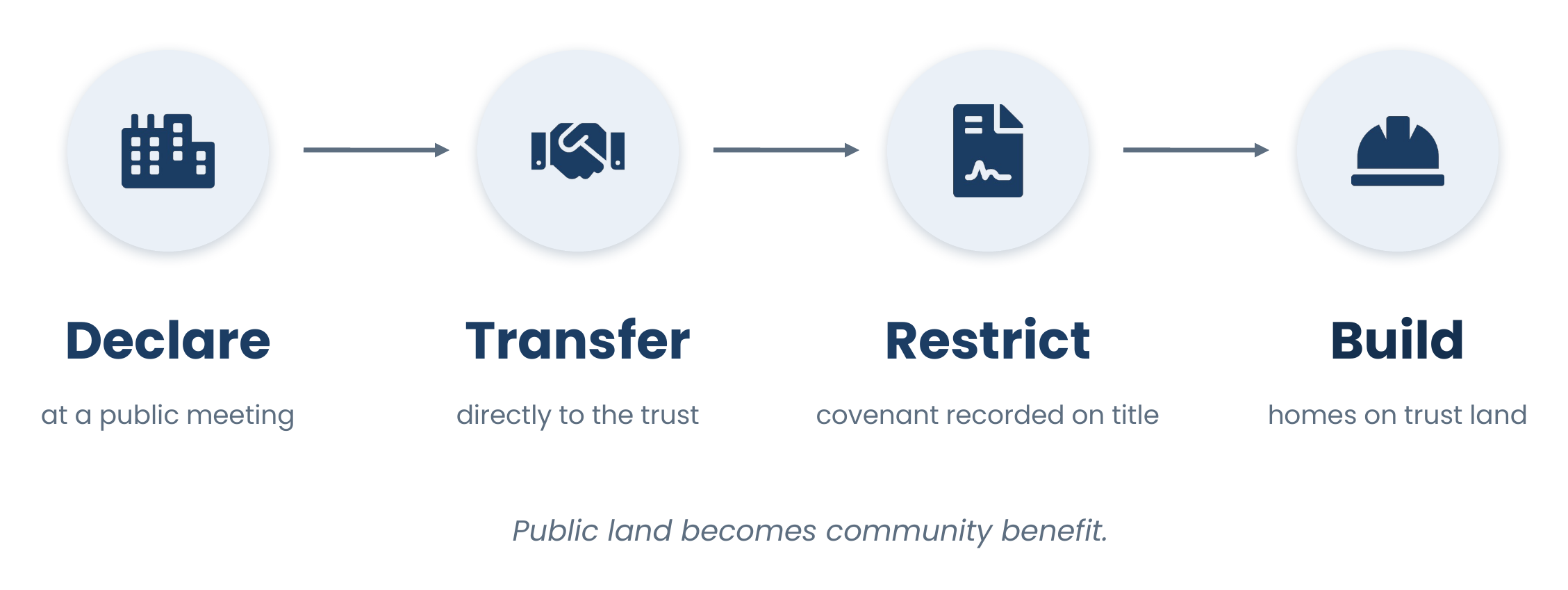
California's Surplus Land Act allows a public agency to transfer unused land directly to a community land trust, with an affordability restriction recorded at transfer (Government Code § 54221(f)(1)(R)). No competitive bidding is required. The land then produces rental homes with a development partner, or owner-occupied homes sold through Affordable Homeownership, and the housing counts toward the agency's state housing goals. Public land becomes community benefit.

Screen capture from Zillow.com (August 7, 2024)
Monterey County is one of the most expensive places to live in the United States, and wages for critical members of our community and workforce have not kept up with the cost of housing.
The Opportunity Housing Trust creates housing opportunities for people who contribute to our communities and economy who would otherwise be overburdened by the cost of rent or homeownership.
-
OHT acquires land through purchase, donation, or transfer from the government or private entities. OHT maintains permanent ownership of this land.
-
We develop new affordable homes on the acquired land or rehabilitates existing structures. This can be done independently or in partnership with other organizations, such as nonprofit developers or housing agencies.
-
We set the sale prices or rent for the homes based on the income levels of the targeted community, ensuring affordability for low- to moderate-income households
-
For homeownership units, OHT sells the home to an income-qualified buyer and retains ownership of the land. The buyer enters into a long-term ground lease at a nominal fee which specifies the terms of the land use and resale restrictions.
-
OHT may offer financial assistance, such as down payment assistance or subsidies, to help income-qualified buyers purchase the home
-
When a homeowner decides to sell their OHT home, the resale price is restricted based on a formula that balances the homeowner's equity gain with maintaining affordability for future buyers. This ensures the home remains affordable in perpetuity
-
OHT provides ongoing support to its homeowners and renters, ensuring they have the resources to maintain their homes and succeed in homeownership or tenancy. This may include education, training, or assistance with home repairs and maintenance
-
As OHT maintains ownership of the land and enforces resale restrictions, it ensures that the homes remain affordable for future generations of buyers or renters, even as market prices rise in the surrounding area